Delicious Cherries: A Designer’s Practical Review
When I first pulled up the Delicious Cherries file on my screen, I wasn’t looking for flashiness. As a designer who spends half my life troubleshooting puckered seams and thread breaks, I look for reliability. I look for designs that translate well from pixel to stitch without requiring a degree in engineering to hoop correctly. This particular design caught my eye because it promises a classic redwork aesthetic, a style that never truly goes out of fashion but is notoriously difficult to get right if the digitizing is lazy.
The mood here is nostalgic and warm. It feels like something you would find in a grandmother’s kitchen, yet it has enough clean lines to fit comfortably in a modern boutique. For those of us running small shops or selling on Etsy, finding that balance between "vintage charm" and "contemporary crispness" is the holy grail. Let’s break down how this design holds up when moved from the computer screen to actual fabric.
First Impressions and Visual Personality
The layout of Delicious Cherries is straightforward, which is often a sign of good digitizing for redwork. Redwork relies entirely on the quality of the running stitch. There are no fill stitches or satin columns to hide behind. If the pathing is poor, the design looks messy. If it’s good, it looks elegant.
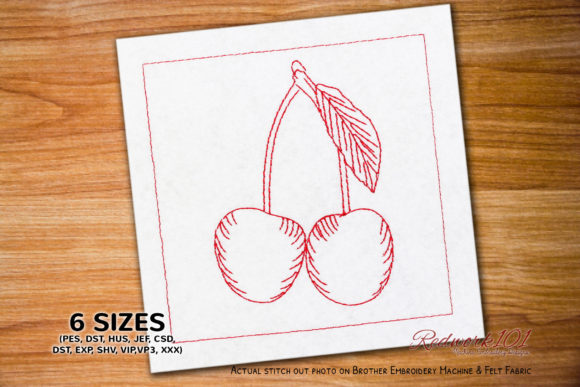
What stands out immediately is the simplicity of the cherry cluster. It avoids excessive detail that often turns into a bird’s nest of thread on smaller hoop sizes. The stems have a natural curve, avoiding the rigid, robotic look that plagues cheaper digital embroidery files. The visual personality is playful but restrained. It doesn’t scream for attention; instead, it invites a closer look. This makes it an excellent candidate for products where subtlety is key, such as high-end linen napkins or minimalist tote bags.
Real-World Application: The Kitchen Towel Test
To truly evaluate a design, you have to imagine it in use. I recently worked on a custom order for a client launching a line of artisanal kitchen goods. She needed a motif that could work on flour sack towels, which are thin, textured, and prone to shifting. Delicious Cherries was a top contender.
Because this is described as a high-quality redwork embroidery, it performs exceptionally well on textured fabrics like waffle weave or linen. The single-color approach (typically red, though customizable) means you aren’t dealing with complex color changes or trim jumps that can snag on loose-weave fabrics. I stitched a test sample on a standard cotton tea towel. The result was clean. The stitches lay flat, and the design retained its shape even after a wash cycle. For an Etsy seller or craft business owner, this reliability translates directly to customer trust. A finished product that looks professional after washing leads to better reviews and repeat buyers.
Beyond the Kitchen: Apparel and Accessories
While the product description highlights kitchen use, don’t limit this design to aprons. I see strong potential for Delicious Cherries in custom apparel. Imagine this embroidered on the left chest of a white canvas tote bag or the hem of a denim jacket. The scale appears versatile enough to work as a small accent on a sweatshirt or a larger statement piece on a pillow cover.
For baby embroidery, this design is a safe and charming choice. The lack of dense fill stitches means the fabric remains soft against sensitive skin. However, when using it on stretchy fabrics like baby onesies, proper stabilizer selection is non-negotiable. A cut-away stabilizer would be my recommendation to prevent distortion over time, especially since redwork outlines can sometimes pull on knits if not supported correctly.
Technical Considerations for Embroiderers
Before you load this onto your machine, there are practical factors to consider. The description mentions that the Box Stitch shown in the picture is optional. This is a crucial detail. If you choose to include a box or border, you must check your hoop size. Ensure your machine’s embroidery area can accommodate the full dimensions including the border. If you are working with a 4x4 hoop, you might need to resize or omit the border to fit the cherry cluster comfortably.
Thread color contrast is another vital element. While red is traditional, this design would look striking in navy blue on cream linen or forest green on natural cotton. Test your thread colors on scrap fabric first. What looks vibrant on screen can look muddy or too subtle on certain fabric textures. Also, consider the stitch density. Redwork should be light. If you notice the fabric puckering during your test run, your tension might be too tight, or the stabilizer might be insufficient.
Fabric and Hoop Constraints
Be cautious when applying this design to dark fabrics. If you switch from red to a lighter color, ensure your thread quality is high to prevent breaking. On curved surfaces like caps, the placement of the stems matters. You want the design to flow with the curve of the cap, not fight against it. For hats, a smaller version of the cherry cluster without any optional borders would likely yield the cleanest result.
Thin fabrics require extra care. If you are stitching on silk or lightweight rayon, use a tear-away stabilizer with a topping to prevent the stitches from sinking into the fabric texture. This ensures the running stitch remains visible and crisp.
Commercial Viability and Brand Consistency
For commercial embroidery projects, consistency is everything. Delicious Cherries offers a level of uniformity that helps build brand recognition. If you are creating a line of summer-themed products, this design can serve as a cohesive element across different items—towels, aprons, and patches. It creates a narrative.
From a sales perspective, simple designs often sell better than complex ones because they are perceived as timeless. They don’t look dated after a season. This makes them ideal for small shop products that need to remain in your inventory for months. When creating printable mockups or digital product previews, this design photographs well. Its clear lines stand out against various backgrounds, making it easier to market online.
Final Verdict and Designer Notes
As a reviewer, I appreciate designs that respect the limitations of the medium. Delicious Cherries feels like it was digitized by someone who understands embroidery, not just graphic design. It is practical, versatile, and aesthetically pleasing.
Here are my final recommendations for anyone planning to use this file:
- Test First: Always stitch out on the actual fabric you plan to sell. Fabric texture changes everything.
- Check Licensing: Confirm the license terms before selling finished items. Most designers allow physical sales but restrict sharing the digital embroidery file itself.
- Stabilizer Matters: Do not skimp on stabilizer. Even simple redwork needs support to look professional.
- Color Experimentation: Don’t stick to red. Try monochromatic schemes for a modern twist.
- Hoop Size: Verify the dimensions of the optional box stitch to ensure it fits your hoop.
In conclusion, this is a solid addition to any designer’s library. It bridges the gap between hobbyist charm and professional quality. Whether you are making a personalized gift for a friend or stocking your Etsy store with summer essentials, Delicious Cherries delivers a clean, reliable, and attractive result. It is a reminder that sometimes, the simplest designs are the most effective.