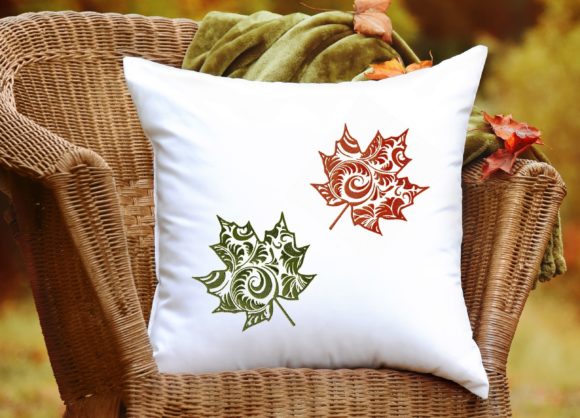
Maple Leaf Curly: A Designer’s Review for Fall Craft Fairs
As an embroidery designer who has spent countless weekends standing behind a booth table, watching customers interact with handmade goods, I know that not every design translates equally well from screen to fabric. When I first loaded the Maple Leaf Curly machine embroidery design onto my hoop, my immediate goal was not just to test stitch quality, but to evaluate its potential as a high-converting craft fair product. The autumn market is saturated with leaf motifs, so standing out requires a blend of aesthetic appeal and practical production efficiency. This review breaks down how this specific floral-inspired embroidery asset performs in real-world selling scenarios.
First Impressions: Rustic Charm Meets Modern Whimsy
The name itself suggests a departure from the rigid, geometric maple leaves we often see in basic clipart libraries. Upon stitching out the sample, the "curly" aspect becomes the defining feature. It feels less like a stiff botanical illustration and more like a whimsical, hand-drawn sketch brought to life with thread. For a craft fair environment, this is crucial. Customers are drawn to items that feel organic and soft, especially during the cozy fall season. The design strikes a balance between rustic farmhouse charm and modern decorative flair. It does not scream "holiday" in a way that limits its shelf life to November; rather, it serves as a beautiful embellishment for general fall projects, extending its selling window from September through December.
Product Versatility for the Weekend Booth
When planning my inventory for a seasonal market, I look for designs that can be applied across multiple product categories without losing their impact. Here is how Maple Leaf Curly performs on various handmade products:
- Tote Bags and Market Bags: This is arguably the strongest application. A large-scale version of the design centered on a canvas tote creates an instant statement piece. The curly lines add movement that looks dynamic when the bag is worn or carried. As a tote bag design, it appeals to shoppers looking for reusable, stylish alternatives to plastic bags.
- Aprons and Tea Towels: Kitchen textiles are staple sellers. For apron embroidery, placing the leaf on the bib or the lower corner adds a touch of elegance without overwhelming the garment. Tea towel embroidery requires careful attention to scale; the design must be small enough to fit the narrow hem but detailed enough to remain visible. The open nature of the curly lines prevents the fabric from puckering excessively, which is vital for thin cotton towels.
- Embroidered Patches: Creating iron-on or sew-on patches allows for batch production. You can stitch multiple leaves on a single hooped piece of felt or twill, cut them out, and sell them as standalone accessories. This is a high-margin small shop product that appeals to younger demographics looking to customize denim jackets or backpacks.
- Caps and Hats: Embroidering on curved surfaces is tricky. The Maple Leaf Curly design works well here if scaled down appropriately. However, one must be cautious with the density of the curls on the front panel of a cap to avoid stiffness.
Visual Appeal and Customer Attention
In a crowded booth, visual hierarchy is everything. The Maple Leaf Curly design has a distinct silhouette that reads clearly from a distance. Unlike dense, solid-filled logos, the airy nature of the curls allows the fabric color to show through, creating a natural contrast. This makes it an excellent choice for dark fabric, provided you use high-contrast thread colors like cream, gold, or burnt orange. For an Etsy seller, this translates well into digital photography. The design photographs beautifully because the threads catch the light differently along the curves, adding depth to printable mockup images and live product shots.
For boutique makers, consistency is key. Using this design across a collection—such as matching pillow covers and table runners—creates a cohesive brand story. It signals to the buyer that you have a curated eye for design assets, increasing the perceived value of the finished product.
Practical Production and Selling Points
From a business owner’s perspective, time is money. One of the advantages of this design is its repeatability. It does not require excessive trimming or complex color changes if stitched in a monochromatic scheme, making it ideal for batch production. Whether you are an experienced embroiderer or just starting your commercial embroidery journey, the workflow is straightforward. However, success depends on understanding the technical requirements.
Since the product description notes that this machine embroidery design comes with multiple embroidery file formats, it is adaptable to various machines. Yet, before committing to a large run of craft fair products, you must verify the specific details. Check the recommended hoop size to ensure it fits your equipment. Confirm the stitch density to prevent fabric distortion, especially on lighter materials like linen or chiffon.
Careful-Use Notes for Professional Results
While the design is versatile, there are pitfalls to avoid. Dense stitch areas can cause puckering if the stabilizer is insufficient. Always use the right stabilizer for your fabric type; a cut-away stabilizer is often safer for stretchy fabrics like t-shirts, while tear-away works for stable wovens like cotton tote bags. Be mindful of tiny details within the curls. If the design is scaled down too much for a small pouch or a child’s item, the fine lines may merge, losing clarity. Test the design on scrap fabric first to determine the minimum viable size.
Additionally, consider the fabric texture. Highly textured towels or thick wool coats may obscure the finer curly details. In such cases, increasing the stitch thickness or choosing a bolder thread weight can help maintain visibility. For dark fabric, ensure your thread colors pop; a subtle tone-on-tone look might get lost under typical craft fair lighting.
Designer’s Checklist for Launch
Before listing Maple Leaf Curly as a core item in your shop, follow these steps to ensure quality and compliance:
- Test Stitch: Always run a test on the actual fabric you intend to sell. Check for registration issues and thread breaks.
- Thread Contrast: Experiment with different thread colors. Autumnal palettes work best, but don’t shy away from unexpected combinations like teal or lavender for a modern twist.
- Review Spacing: Ensure there is adequate spacing between elements if combining with text or other graphics.
- Confirm Licensing: Crucially, confirm commercial licensing before selling finished products. Most digital embroidery file providers offer different licenses for personal vs. commercial use. Ensure you have the right to sell the physical items you create.
- Create Mockups: Generate at least one real mockup or high-quality photo for your online listings. Show the design in context—on a table setting or being held by a model—to help buyers visualize ownership.
In conclusion, Maple Leaf Curly is a strong contender for any fall-focused embroidery business. Its blend of elegance and whimsy appeals to a broad audience, from traditionalists to modern crafters. By paying attention to stitch density, fabric choice, and presentation, you can turn this single design into a profitable line of handmade products that stand out in any market.